




![settings.logos[0].icon](https://sigi-jordan25.s3.eu-central-1.amazonaws.com/877993618407682.png)

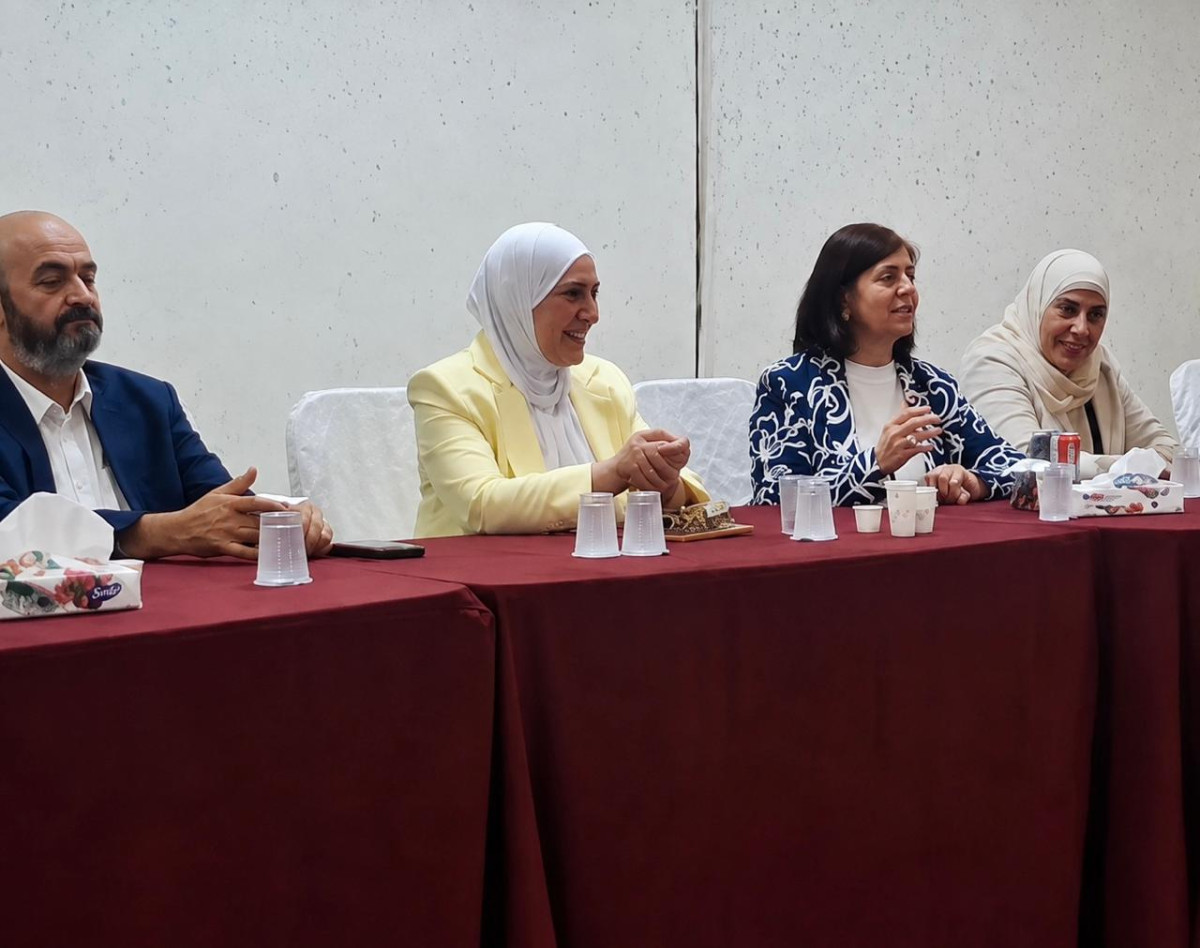
Northern Jordan Valley– Dr. Eman Al-Hussein, Chairperson of the Board of Directors of the Jordanian Women’s Solidarity Institute “Tadamon,” participated in a dialogue session with a number of women working in the agricultural sector and women running home-based and productive businesses in Northern Shouneh. The session was attended by the Mayor of Northern Shouneh Municipality, MP Hala Al-Jarrah, as well as representatives of relevant institutions and organizations.
Al-Hussein emphasized the important economic and productive role played by women in local communities, noting that Jordanian women are key partners in economic and social development and that supporting and economically empowering women contributes to strengthening the stability of families and local communities.
She noted that women in the Northern Jordan Valley contribute to a wide range of activities, whether through working in the agricultural sector and contributing to production or through home-based and productive businesses, including tailoring, flower arrangement and recycling, preparing pastries, traditional taboon bread, food products, and many other activities and projects that reflect women’s skills, productive capacities, and ability to generate income.
Al-Hussein highlighted several challenges facing women workers and women entrepreneurs, foremost among them limited marketing opportunities, difficulties accessing financing, and the need for training and capacity development. She also stressed the importance of providing social and economic protection to contribute to the sustainability of businesses and safeguard women workers’ rights.
She emphasized the importance of raising awareness of the provisions of the Social Security Law and mechanisms for inclusion under social protection schemes, considering these important tools for protecting women workers and enhancing the economic and social stability of women and their families.
Al-Hussein stressed the need to move economic empowerment of women beyond slogans toward providing tangible programs, opportunities, and support tools, including improving marketing opportunities, facilitating access to financing, providing training and capacity building, and supporting product development, packaging, and digital marketing. Such measures would help women entrepreneurs reach broader markets and achieve sustainability.
She also underscored the important role that municipalities, government institutions, the private sector, and civil society organizations can play in supporting women workers and women running productive businesses by providing spaces and marketing venues, organizing exhibitions and bazaars, and connecting women entrepreneurs with available opportunities, programs, and markets.
She explained that supporting productive women represents an investment in families, communities, and the national economy, given the contribution of women-led businesses to generating income, strengthening local production, and supporting economic development in local communities.
The dialogue session comes within the framework of efforts to enhance women’s economic participation in local communities and support women working in the agricultural sector and women running home-based and productive businesses, thereby expanding their economic opportunities, strengthening their self-reliance, and enabling them to contribute more effectively to local development.


